Metabolomics
Metabolomics investigates the small molecules and metabolites that reflect real-time biochemical activity within biological systems. By measuring metabolic pathways, cellular energy states, and disease-associated chemical signatures, metabolomics connects molecular regulation to phenotype, physiology, and human health.
What is Metabolomics?
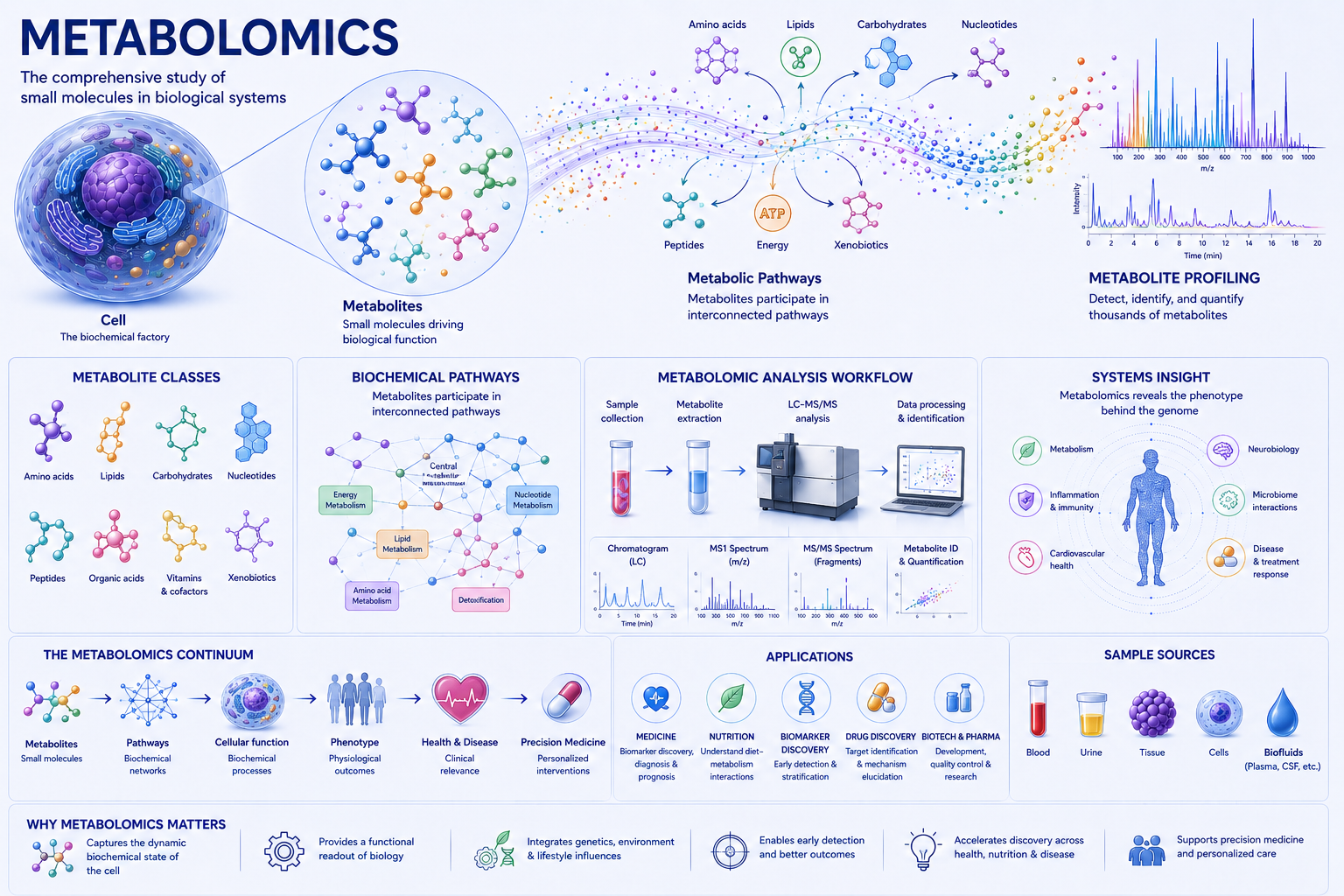
Metabolomics is the study of small molecules, metabolites, and biochemical pathways that reflect the real-time physiological state of cells, tissues, organisms, and environments.
Modern metabolomics uses mass spectrometry, nuclear magnetic resonance, pathway analysis, and computational biology to understand metabolism, disease mechanisms, biomarkers, drug response, and precision health.
Applications in Research & Medicine
Metabolite Profiling
Measuring small molecules that reflect biological state, cellular activity, and disease processes.
Pathway Analysis
Mapping biochemical reactions and metabolic network activity across biological systems.
Disease Biomarkers
Identifying metabolite signatures linked to diagnosis, progression, treatment response, and risk.
Metabolic Phenotyping
Connecting metabolism to physiology, environment, phenotype, nutrition, and human health.
Metabolomics and Omics Sciences
Metabolomics provides a direct snapshot of biochemical activity by measuring the metabolites produced through cellular processes. It captures the functional outcome of genomic, transcriptomic, proteomic, environmental, and physiological influences.
At PanorOmics, metabolomics serves as a critical layer for understanding cellular metabolism, disease mechanisms, biomarker discovery, precision health, and systems-level biology.
Explore Related Publications →