Genomics
Genomics investigates the complete set of genetic information encoded within DNA. Through sequencing, variant discovery, computational biology, and systems-level analysis, genomics enables precision medicine, disease discovery, and biological understanding across individuals and populations.
What is Genomics?
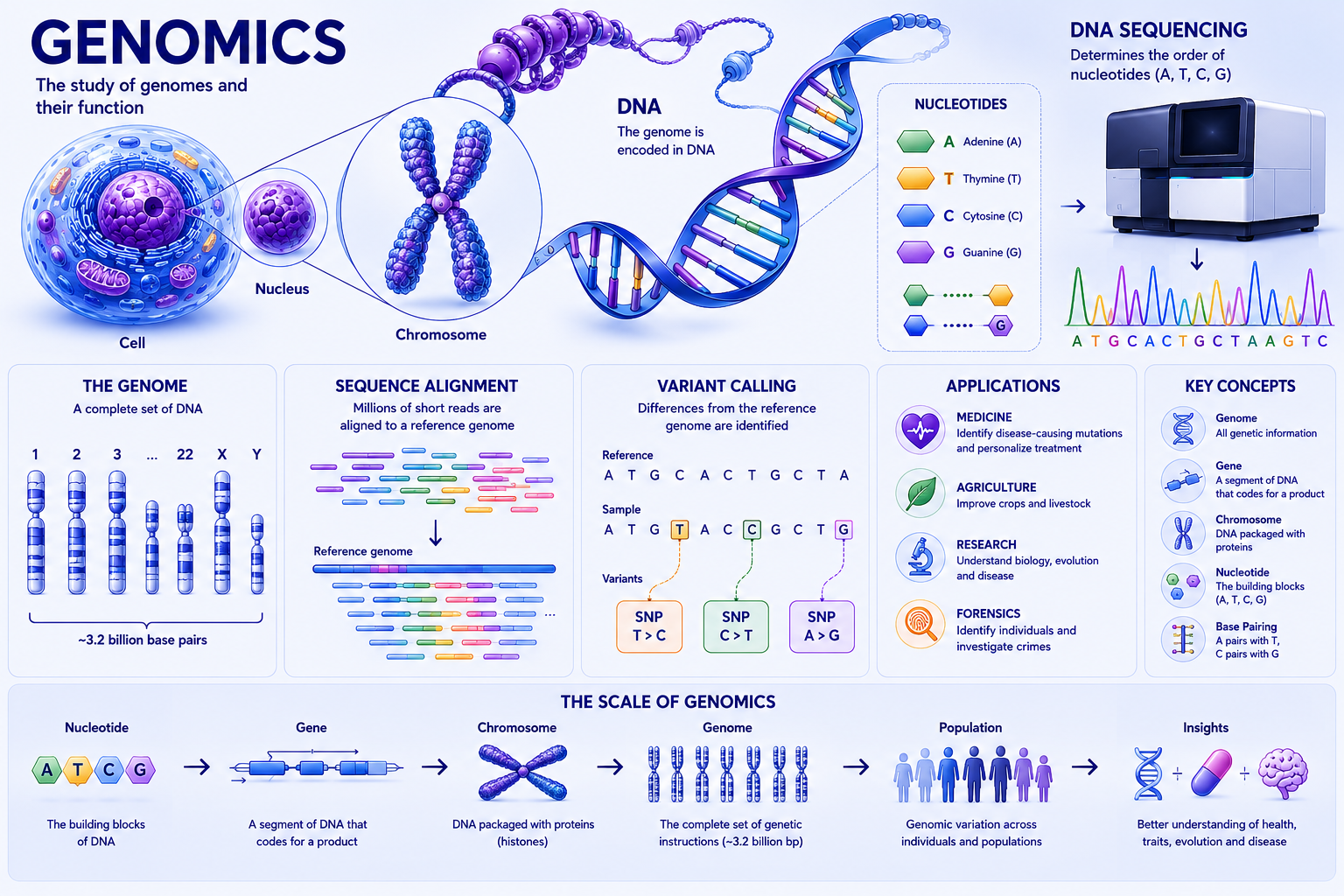
Genomics is the study of genomes, the complete DNA content of an organism. It examines genes, regulatory regions, genetic variation, genome structure, and how inherited or acquired changes influence biological function and disease.
Modern genomics combines sequencing technologies, computational analysis, population-scale datasets, and biological interpretation to understand health, disease, evolution, and precision medicine.
Applications in Research & Medicine
Genome Sequencing
Reading DNA information at scale to study organisms, populations, inherited disease, and biological variation.
Variant Discovery
Identifying genetic differences linked to inherited disorders, cancer, disease risk, and therapeutic response.
Precision Medicine
Connecting genomic information to diagnosis, prevention, treatment selection, and individualized care.
Population Genomics
Studying genetic diversity across individuals, communities, ancestry groups, and populations.
Genomics and Omics Sciences
Genomics provides the foundational layer of omics sciences by defining the inherited and acquired DNA information that shapes biological systems. When combined with transcriptomics, epigenomics, proteomics, metabolomics, lipidomics, and microbiomics, genomics helps explain how molecular information becomes biological function.
At PanorOmics, genomics is part of a broader systems-level framework for understanding life, disease, biotechnology, and precision health.
Explore Related Publications →