Precision Medicine
Precision medicine uses genomic information to improve diagnosis, risk assessment, treatment selection, and patient care. By connecting molecular variation to clinical decision-making, this field transforms genomic knowledge into individualized medicine.
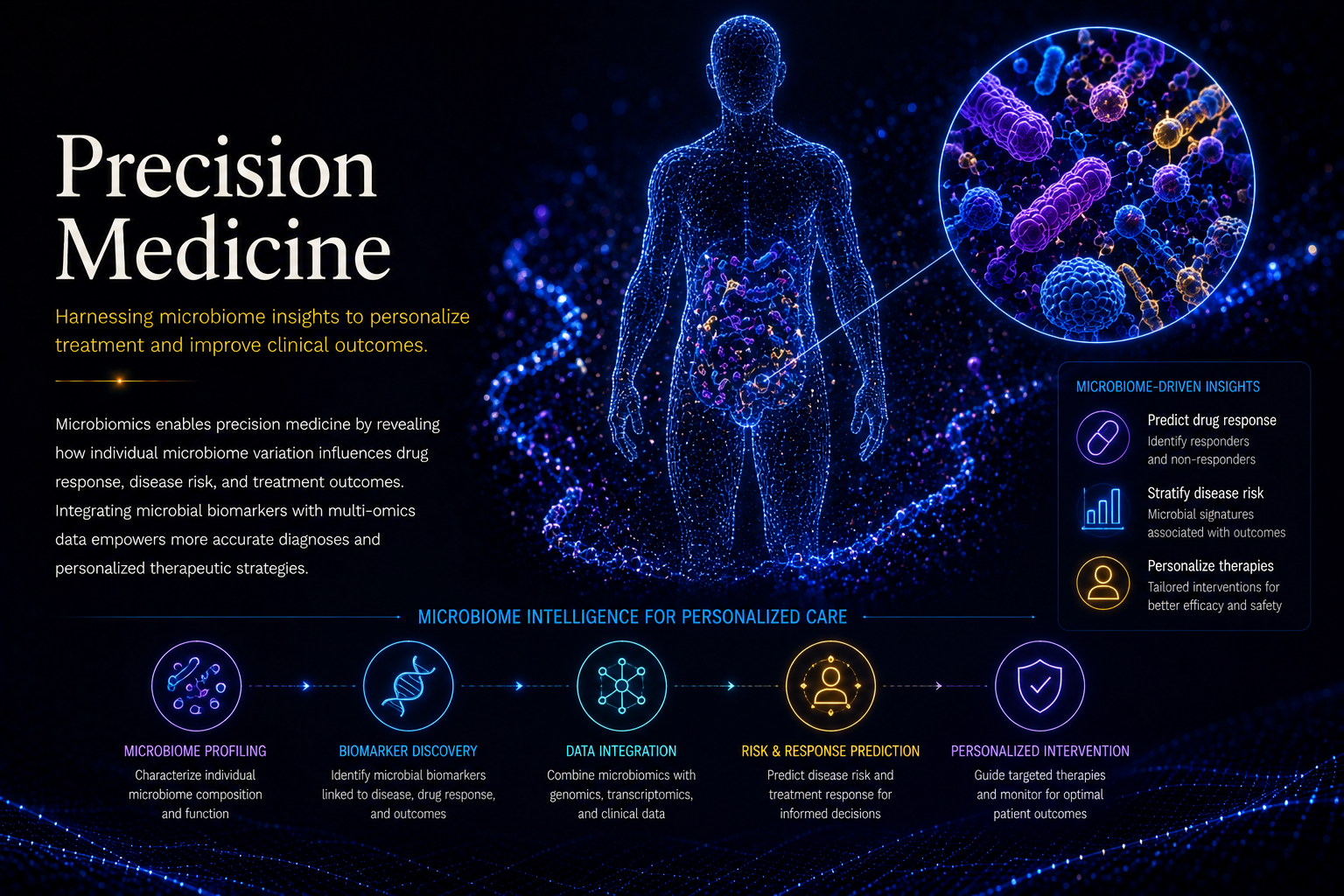
Research Overview
Precision medicine moves beyond one-size-fits-all healthcare by integrating genomic information into clinical care. It helps clinicians understand which patients are at risk, which therapies are most likely to work, and which genomic findings are relevant for diagnosis, prognosis, and long-term management.
At PanorOmics, precision medicine is the clinical application of genomics: the point where sequencing, variant discovery, and interpretation become actionable for real patients. It bridges molecular biology, computational analysis, diagnostics, therapeutics, and longitudinal healthcare.
Core Research Areas
Cancer Genomics
Using tumor genomic profiling to guide diagnosis, prognosis, targeted therapy selection, and precision oncology decision-making.
Rare & Inherited Diseases
Identifying pathogenic variants to improve diagnosis, family counseling, disease classification, and individualized patient management.
Pharmacogenomics
Understanding how genetic variation influences drug metabolism, efficacy, toxicity, and precision prescribing.
Clinical Decision Support
Integrating genomic findings into routine healthcare through interpretation frameworks, evidence-based guidelines, and AI-assisted clinical workflows.
Clinical Workflow
A patient presents with clinical symptoms, cancer, inherited disease risk, or a need for precision treatment guidance.
Clinicians evaluate history, symptoms, pathology, family background, and diagnostic context.
Genomic testing is performed through clinical sequencing, targeted panels, exomes, or whole genomes.
Relevant inherited or somatic variants are detected and prioritized from sequencing data.
Variants are linked to genes, disease mechanisms, evidence levels, therapeutic implications, and reporting standards.
Genomic results inform diagnosis, targeted therapy, surveillance, risk assessment, and patient-specific care plans.
Longitudinal monitoring tracks response, progression, resistance, and future precision care decisions.
Clinical Technologies
Clinical NGS
Clinical next-generation sequencing platforms support inherited disease testing, oncology panels, and precision diagnostics.
Liquid Biopsy
Blood-based genomic testing enables noninvasive detection of tumor-derived DNA, monitoring, and resistance tracking.
Companion Diagnostics
Molecular assays connect specific genomic biomarkers to therapeutic eligibility and treatment selection.
Polygenic Risk Scores
Aggregated genetic risk models support disease risk stratification and preventive precision medicine.
Digital Pathology
Computational pathology and molecular pathology integration enhance precision diagnosis and tumor classification.
AI Clinical Decision Support
AI-assisted systems help interpret genomic findings, prioritize evidence, and support clinical recommendations.
Clinical Applications
Oncology
Precision genomics guides molecular classification, targeted therapies, resistance analysis, and immunotherapy biomarkers.
Rare Disease
Genome-informed diagnosis improves disease discovery, family counseling, and clinical management.
Cardiovascular Medicine
Genomic risk, inherited cardiomyopathies, arrhythmia syndromes, and precision prevention strategies are increasingly integrated into care.
Neurological Disorders
Genetic testing supports diagnosis and subtype classification of neurodevelopmental and neurodegenerative disease.
Prenatal & Newborn Care
Genomic testing informs screening, early diagnosis, and personalized clinical intervention in developmental disorders.
Pharmacology
Drug-gene relationships help optimize dosing, reduce toxicity, and improve treatment response.
Landmark Discoveries
Human Genome Project
Established the genomic foundation for modern molecular medicine, clinical genomics, and precision healthcare.
BRCA1 / BRCA2 Discovery
The discovery of BRCA1 and BRCA2 helped establish inherited cancer genetics as an early model for genomic risk assessment.
HER2-Targeted Therapy
FDA approval of trastuzumab for HER2-positive breast cancer showed how biomarker-guided therapy could transform oncology.
EGFR-Targeted Lung Cancer Therapy
EGFR-targeted therapy and later mutation-matched approvals helped make tumor genomic profiling central to precision oncology.
Pharmacogenomics Implementation
Clinical pharmacogenomics guidelines increasingly support personalized prescribing and drug-response prediction.
Clinical Genomic Testing
Tumor profiling, inherited disease testing, and sequencing-based diagnostics increasingly integrate genomics into routine clinical decision-making.
AI-Assisted Precision Medicine
AI increasingly supports genomic interpretation, biomarker analysis, clinical decision support, and precision medicine research.
Featured Publications
A Strategy for Using Multigene Testing in Precision Oncology
Identification of BRCA1 and BRCA2 in Hereditary Cancer Risk
HER2 as a Therapeutic Target in Breast Cancer
EGFR Mutations and Targeted Therapy in Lung Cancer
Pharmacogenomics in Clinical Practice
Genome Sequencing for Diagnosis in Rare Disease
Continue Your Research Journey
Genome Sequencing →
Continue exploring the Genomics Research Center.
Variant Discovery →
Continue exploring the Genomics Research Center.
Population Genomics →
Continue exploring the Genomics Research Center.