DNA Methylation
DNA methylation research studies chemical modifications of DNA that influence gene regulation, chromatin state, cellular identity, biological aging, disease mechanisms, and epigenomic biomarkers.
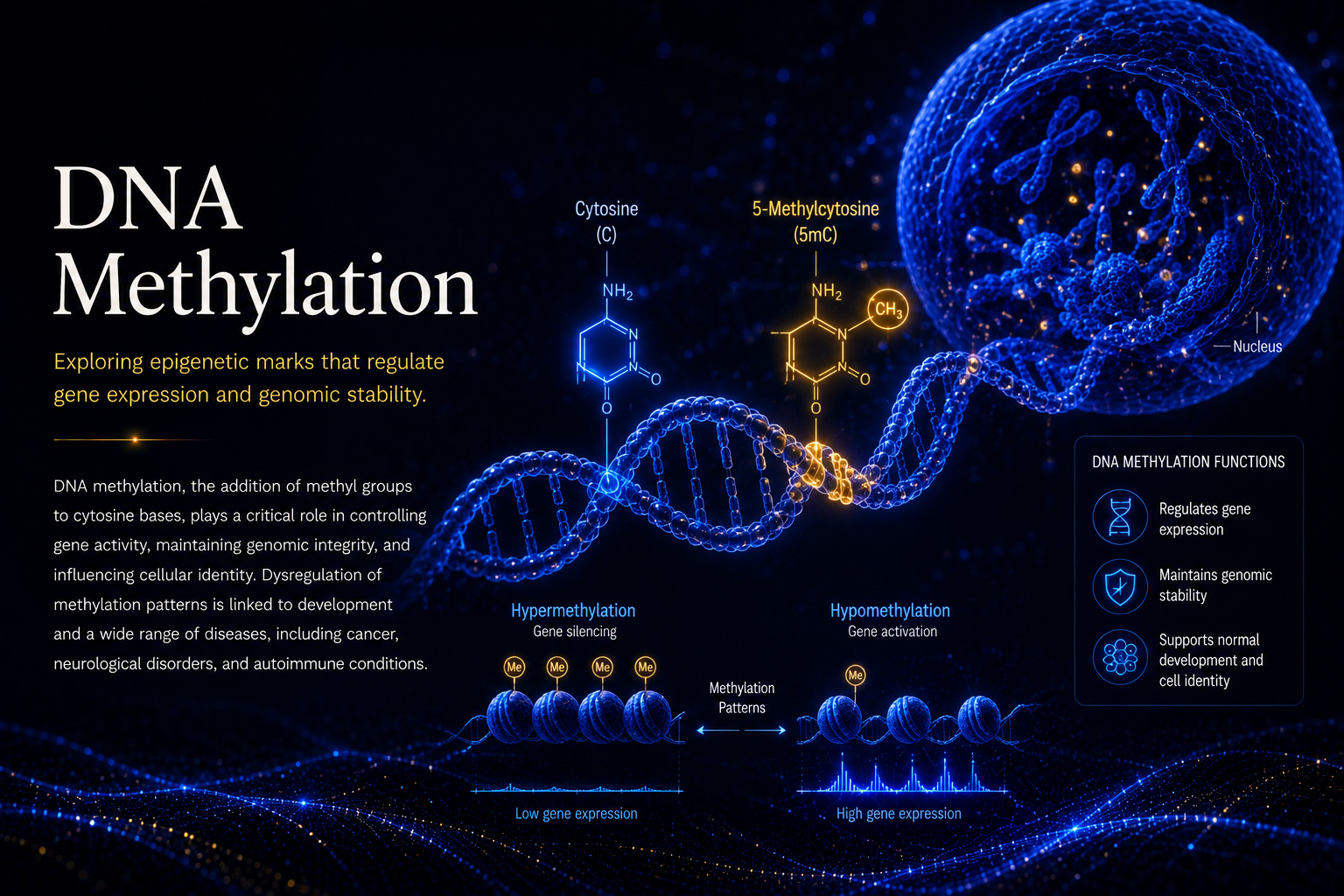
Research Overview
DNA methylation is one of the best-studied epigenomic mechanisms. By adding methyl groups to DNA, especially at CpG sites, cells can regulate gene activity, maintain cellular identity, control developmental programs, and respond to disease-associated regulatory disruption.
At PanorOmics, DNA methylation is presented as a core epigenomics research area: a bridge between genome regulation, gene expression, aging biology, cancer epigenomics, biomarker discovery, and precision medicine.
Core Research Areas
CpG Methylation Mapping
Studying DNA methylation patterns at CpG sites to understand gene regulation, promoter activity, chromatin state, and cellular identity.
Gene Regulation and Silencing
Analyzing how DNA methylation influences transcriptional repression, gene activity, imprinting, and regulatory control.
Developmental and Cell-State Methylation
Investigating methylation changes during development, differentiation, aging, disease progression, and cellular reprogramming.
Clinical Methylation Biomarkers
Using DNA methylation signatures to support disease classification, prognosis, early detection, aging research, and precision medicine studies.
DNA Methylation Technologies
Bisulfite Sequencing
Sequencing-based method that detects methylated cytosines by converting unmethylated cytosines while preserving methylated sites.
Whole-Genome Bisulfite Sequencing
Genome-wide DNA methylation profiling that provides high-resolution methylation maps across the entire genome.
Reduced Representation Bisulfite Sequencing
Targeted bisulfite sequencing approach that enriches CpG-rich regions for cost-effective methylation analysis.
DNA Methylation Arrays
Array-based platforms used to measure methylation at selected CpG sites across large sample cohorts.
AI-Assisted Methylation Analysis
Computational approaches that support methylation signature discovery, epigenetic age prediction, disease classification, and regulatory interpretation.
DNA Methylation Modalities
Promoter Methylation
Measures methylation near gene promoters, often associated with transcriptional repression or altered gene activity.
Enhancer Methylation
Analyzes methylation changes at distal regulatory elements that influence cell-type-specific gene expression.
Global DNA Methylation
Evaluates genome-wide methylation patterns associated with development, aging, disease, and environmental exposure.
Epigenetic Clock Analysis
Uses DNA methylation patterns to estimate biological aging and age-associated disease risk.
Cancer Methylation Profiling
Identifies tumor-associated methylation changes involved in gene silencing, subtype classification, and biomarker discovery.
Single-cell DNA Methylation
Profiles methylation patterns in individual cells to reveal epigenomic heterogeneity and cell-state variation.
Related epigenomic approaches such as chromatin accessibility, disease epigenomics, and histone modification analysis are explored across the Epigenomics Research Center.
Landmark DNA Methylation Milestones
DNA Methylation Foundations
Early discoveries established DNA methylation as a chemical modification of DNA with potential regulatory significance.
DNA Methylation and Gene Regulation
DNA methylation became strongly linked with gene silencing, genomic imprinting, X-chromosome inactivation, and cancer-associated regulation.
Cancer Methylation Research
Aberrant promoter methylation emerged as a major mechanism of tumor suppressor gene silencing and cancer epigenomic disruption.
Genome-Wide Methylation Profiling
Bisulfite sequencing and methylation arrays enabled genome-wide mapping of DNA methylation across tissues, diseases, and cohorts.
Epigenetic Clocks
DNA methylation-based clocks connected methylation patterns with biological aging, age-related disease, and lifespan research.
Single-cell DNA Methylation
Single-cell methylation methods revealed epigenomic heterogeneity across cells, tissues, tumors, and developmental states.
AI-Assisted DNA Methylation Interpretation
AI increasingly supports methylation biomarker discovery, epigenetic age modeling, disease classification, and regulatory epigenomics.
Featured Publications
DNA Methylation and Gene Regulation
DNA Methylation and Human Cancer
Comprehensive DNA Methylation Profiling
DNA Methylation Age of Human Tissues and Cell Types
Single-cell DNA Methylation Analysis
AI Models for DNA Methylation and Epigenetic Aging
Continue Your Research Journey
Chromatin Accessibility →
Continue exploring the Epigenomics Research Center.
Disease Epigenomics →
Continue exploring the Epigenomics Research Center.
Histone Modifications →
Continue exploring the Epigenomics Research Center.