Human Health
Human health microbiomics studies microbial communities across the body and their roles in metabolism, immunity, inflammation, disease risk, therapeutic response, and systems-level health.
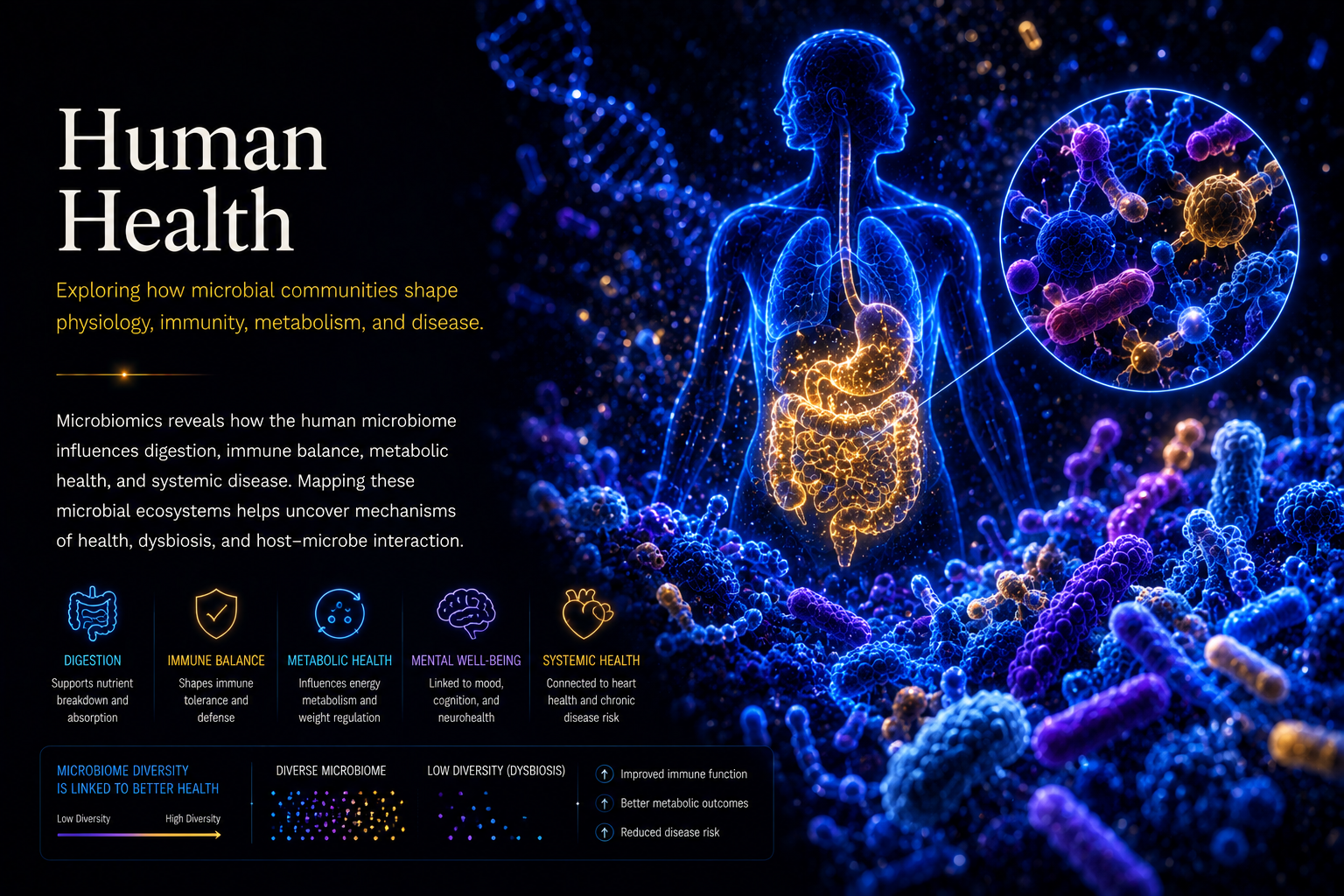
Research Overview
Human health microbiomics examines how microbial communities influence biological function across the gut, skin, oral cavity, respiratory tract, reproductive system, and other body sites. These microbial ecosystems interact with host immunity, metabolism, epithelial barriers, inflammation, and disease-associated pathways.
At PanorOmics, human health is presented as a core microbiomics research area: a bridge between microbial ecology, host biology, chronic disease, immune regulation, biomarker discovery, precision health, and multi-omics interpretation.
Core Research Areas
Gut Microbiome and Health
Studying how gut microbial communities influence digestion, immunity, metabolism, inflammation, and systemic health.
Host–Microbiome Interactions
Analyzing how microbes communicate with host cells, immune pathways, metabolic networks, and epithelial barriers.
Microbiome and Chronic Disease
Investigating microbial patterns associated with obesity, diabetes, cancer, inflammatory bowel disease, neurological disorders, and cardiovascular disease.
Microbiome Biomarkers
Identifying microbial signatures that support disease risk assessment, diagnosis, prognosis, treatment response, and precision health research.
Human Health Microbiomics Technologies
16S rRNA Sequencing
Amplicon sequencing used to profile bacterial and archaeal community composition across human-associated microbiome samples.
Shotgun Metagenomics
Whole-community DNA sequencing used to identify microbial species, genes, pathways, and functional potential.
Metatranscriptomics
RNA-based microbiome profiling used to study active microbial gene expression and functional response.
Metabolomics Integration
Combines microbial community data with metabolite profiles to understand host–microbe biochemical interactions.
AI-Assisted Human Microbiome Analysis
Computational approaches that support microbial classification, health-state prediction, biomarker discovery, and systems-level interpretation.
Human Health Microbiomics Modalities
Gut Microbiomics
Profiles intestinal microbial communities involved in metabolism, immunity, inflammation, and gastrointestinal health.
Oral Microbiomics
Studies microbial communities in the mouth associated with oral health, inflammation, systemic disease, and microbial transmission.
Skin Microbiomics
Analyzes skin-associated microbes involved in barrier function, immune response, infection risk, and inflammatory skin disease.
Respiratory Microbiomics
Studies airway and lung microbial communities linked to infection, inflammation, asthma, COPD, and respiratory health.
Reproductive Microbiomics
Profiles microbial communities associated with reproductive health, pregnancy, inflammation, and disease risk.
Multi-omics Human Microbiome Integration
Combines microbiome data with genomics, transcriptomics, proteomics, metabolomics, lipidomics, and clinical information.
Related microbiomic approaches such as environmental science, precision medicine, and infectious disease microbiomics are explored across the Microbiomics Research Center.
Landmark Human Microbiome Milestones
Human Microbiology Foundations
Culture-based microbiology established that microbes colonize the human body and influence infection, digestion, and health.
Molecular Microbiome Profiling
DNA-based methods expanded human microbiome research beyond culture-based detection toward community-level microbial analysis.
Human Microbiome Project
Large-scale efforts characterized microbial communities across human body sites and established reference frameworks for human microbiome research.
Microbiome and Chronic Disease
Human microbiome studies increasingly linked microbial community patterns with chronic disease, metabolism, immunity, and inflammation.
Multi-omics Host–Microbiome Research
Integrated omics approaches connect microbial communities with host gene expression, metabolites, proteins, immune pathways, and clinical phenotypes.
Microbiome-Based Health Stratification
Microbiome signatures increasingly support patient stratification, disease risk modeling, nutrition research, and precision health studies.
AI-Assisted Human Microbiome Interpretation
AI increasingly supports microbial pattern recognition, disease association discovery, host–microbiome modeling, and precision health research.
Featured Publications
Structure, Function and Diversity of the Healthy Human Microbiome
A Framework for Human Microbiome Research
The Human Gut Microbiome and Health
Gut Microbiota in Health and Disease
Multi-omics of the Human Microbiome
AI and Human Microbiome Analysis
Continue Your Research Journey
Environmental Science →
Continue exploring the Microbiomics Research Center.
Precision Medicine →
Continue exploring the Microbiomics Research Center.
Infectious Diseases →
Continue exploring the Microbiomics Research Center.