Precision Medicine
Precision medicine microbiomics studies how microbial communities influence individual disease risk, therapeutic response, immune regulation, nutrition, drug metabolism, and personalized health strategies.
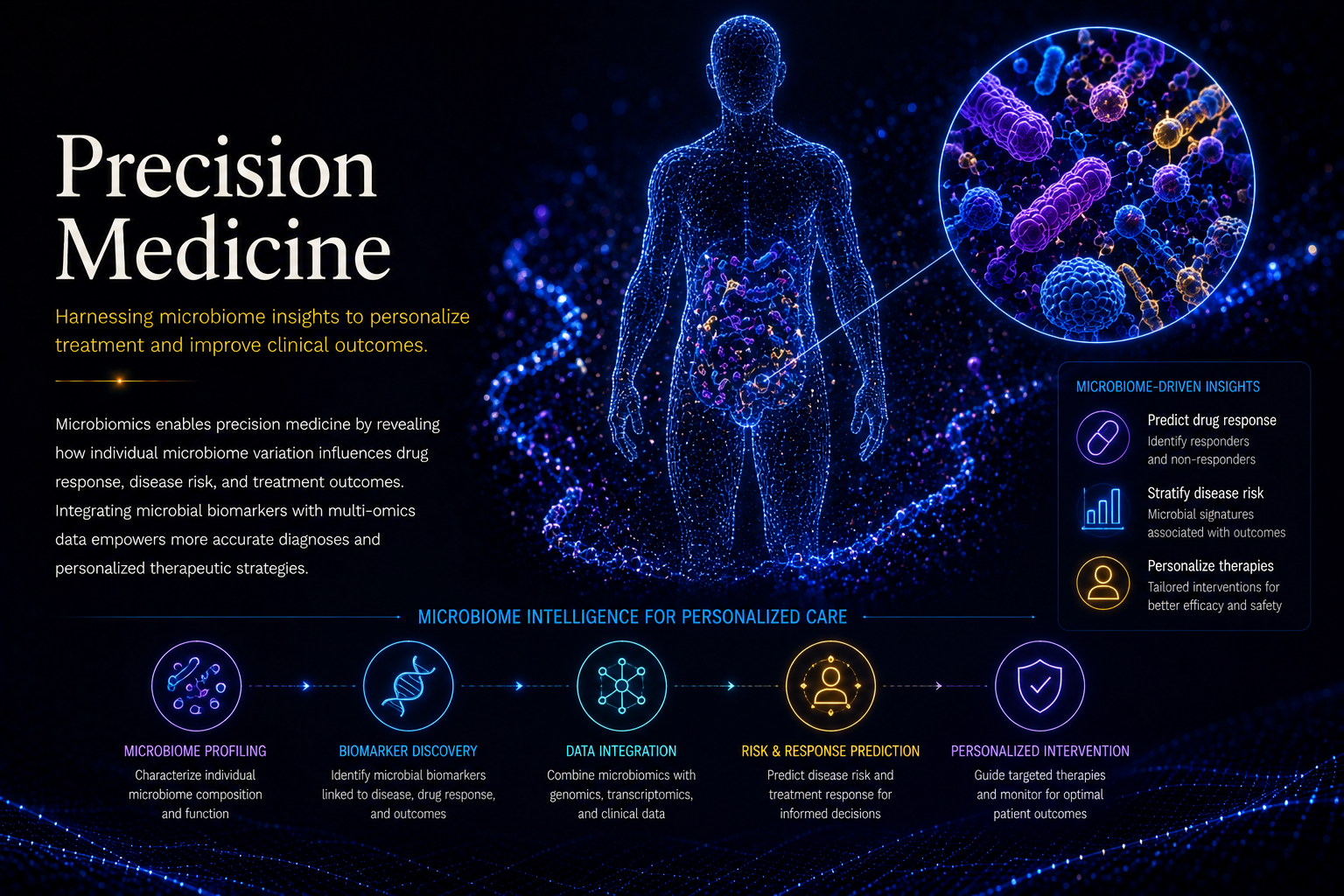
Research Overview
Precision medicine microbiomics uses microbial community data to understand why individuals differ in disease risk, drug response, immune activity, metabolism, and clinical outcomes. Because the microbiome interacts with host biology, diet, environment, and therapeutics, it can provide an important layer of personalized health interpretation.
At PanorOmics, precision medicine is presented as a core microbiomics research area: a bridge between microbial ecology, host biology, pharmacology, immune response, biomarker discovery, patient stratification, and multi-omics precision health.
Core Research Areas
Microbiome-Based Patient Stratification
Using microbial community patterns to classify patients by disease risk, treatment response, immune state, and clinical phenotype.
Personalized Microbiome Therapeutics
Studying how microbiome data can guide probiotics, prebiotics, dietary strategies, microbial therapies, and treatment optimization.
Drug–Microbiome Interactions
Analyzing how microbial communities influence drug metabolism, therapeutic efficacy, adverse effects, and individualized treatment response.
Microbiome Biomarker Discovery
Identifying microbial signatures that support diagnosis, prognosis, disease monitoring, therapeutic response prediction, and precision health research.
Precision Microbiomics Technologies
16S rRNA Sequencing
Amplicon sequencing used to profile microbial community composition for patient stratification and clinical microbiome research.
Shotgun Metagenomics
Whole-community sequencing used to identify microbial species, genes, pathways, resistance markers, and functional potential.
Metabolomics Integration
Combines microbiome profiles with metabolite data to understand host–microbe biochemical interactions and treatment response.
Clinical Multi-omics
Integrates microbiome data with genomics, transcriptomics, proteomics, metabolomics, lipidomics, immune profiling, and clinical outcomes.
AI-Assisted Precision Microbiomics
Computational approaches that support patient stratification, biomarker discovery, response prediction, and personalized microbiome interpretation.
Precision Microbiomics Modalities
Gut Microbiome Precision Health
Uses gut microbiome profiles to study metabolic health, inflammation, nutrition, immune function, and disease risk.
Microbiome-Based Risk Prediction
Identifies microbial signatures associated with disease susceptibility, progression, recurrence, or treatment outcome.
Therapeutic Response Modeling
Studies how microbiome features influence response to drugs, immunotherapy, antibiotics, diet, and microbial interventions.
Nutrition and Microbiome Personalization
Connects diet, microbial metabolism, host response, and individualized nutritional strategies.
Pharmacomicrobiomics
Examines how microbial communities modify drugs, influence pharmacology, and contribute to variable treatment response.
Multi-omics Precision Medicine
Combines microbiome data with molecular and clinical data to support individualized health and disease interpretation.
Related microbiomic approaches such as environmental science, human health, and infectious disease microbiomics are explored across the Microbiomics Research Center.
Landmark Precision Microbiomics Milestones
Human Microbiome Project
Large-scale human microbiome mapping established reference frameworks for linking microbial communities with health and disease.
Microbiome and Disease Stratification
Microbiome studies increasingly identified microbial signatures associated with disease risk, disease subtypes, and clinical outcomes.
Microbiome Therapeutics
Microbial interventions, including fecal microbiota transplantation and defined microbial therapies, expanded interest in microbiome-guided treatment.
Pharmacomicrobiomics
Research increasingly showed that microbial communities can influence drug metabolism, therapeutic response, toxicity, and treatment variability.
Microbiome and Immunotherapy Response
Studies connected gut microbiome composition with cancer immunotherapy response, immune regulation, and treatment outcomes.
Multi-omics Precision Microbiomics
Integrated omics approaches connect microbiome profiles with host genomics, immune activity, metabolites, proteins, lipids, and clinical phenotypes.
AI-Assisted Precision Microbiome Interpretation
AI increasingly supports microbiome biomarker discovery, patient stratification, therapeutic response prediction, and personalized health modeling.
Featured Publications
Structure, Function and Diversity of the Healthy Human Microbiome
A Framework for Human Microbiome Research
The Microbiome and Precision Medicine
Gut Microbiome and Cancer Immunotherapy Response
Pharmacomicrobiomics and Drug Response
AI and Precision Microbiome Analysis
Continue Your Research Journey
Environmental Science →
Continue exploring the Microbiomics Research Center.
Human Health →
Continue exploring the Microbiomics Research Center.
Infectious Diseases →
Continue exploring the Microbiomics Research Center.