Transcriptomics
Transcriptomics studies the complete set of RNA transcripts produced by the genome. It reveals how genes are activated, regulated, and translated into biological function across cells, tissues, disease states, and environmental conditions.
What is Transcriptomics?
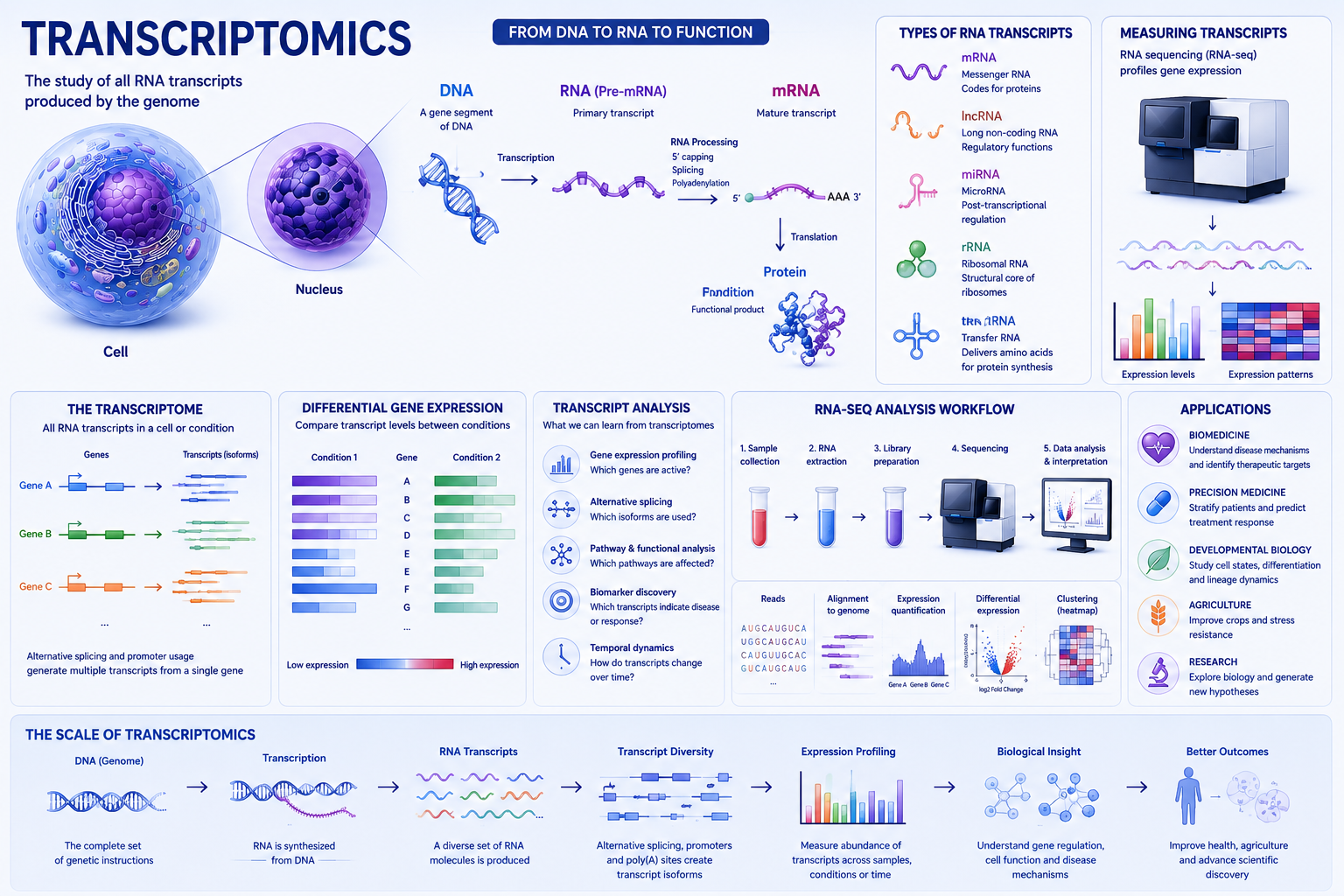
Transcriptomics is the study of RNA molecules produced by cells, tissues, or organisms under specific biological conditions. It provides insight into which genes are active, how strongly they are expressed, and how gene expression changes across development, disease, treatment, and environment.
Modern transcriptomics uses RNA sequencing, single-cell analysis, spatial methods, and computational biology to connect gene regulation with biological function, cellular identity, disease mechanisms, and therapeutic discovery.
Applications in Research & Medicine
RNA Expression
Measuring gene activity through RNA abundance across cells, tissues, and biological conditions.
RNA-seq
Sequencing transcripts to profile biological states, disease signatures, and treatment responses.
Alternative Splicing
Understanding how one gene can generate multiple RNA isoforms with different biological roles.
Non-coding RNA
Studying regulatory RNAs including lncRNA, miRNA, circRNA, and other non-coding RNA classes.
Transcriptomics and Omics Sciences
Transcriptomics connects genomic information to biological function by revealing how genes are actively expressed across cells, tissues, developmental stages, disease states, and environmental contexts.
At PanorOmics, transcriptomics serves as a central bridge between the genome and downstream molecular phenotypes, enabling systems-level understanding of life, disease, and biotechnology.
Explore Related Publications →