Epigenomics
Epigenomics investigates the chemical modifications and chromatin states that regulate gene activity without altering the DNA sequence. By studying DNA methylation, histone modifications, chromatin accessibility, and regulatory landscapes, epigenomics reveals how cells control identity, development, disease, and environmental response.
What is Epigenomics?
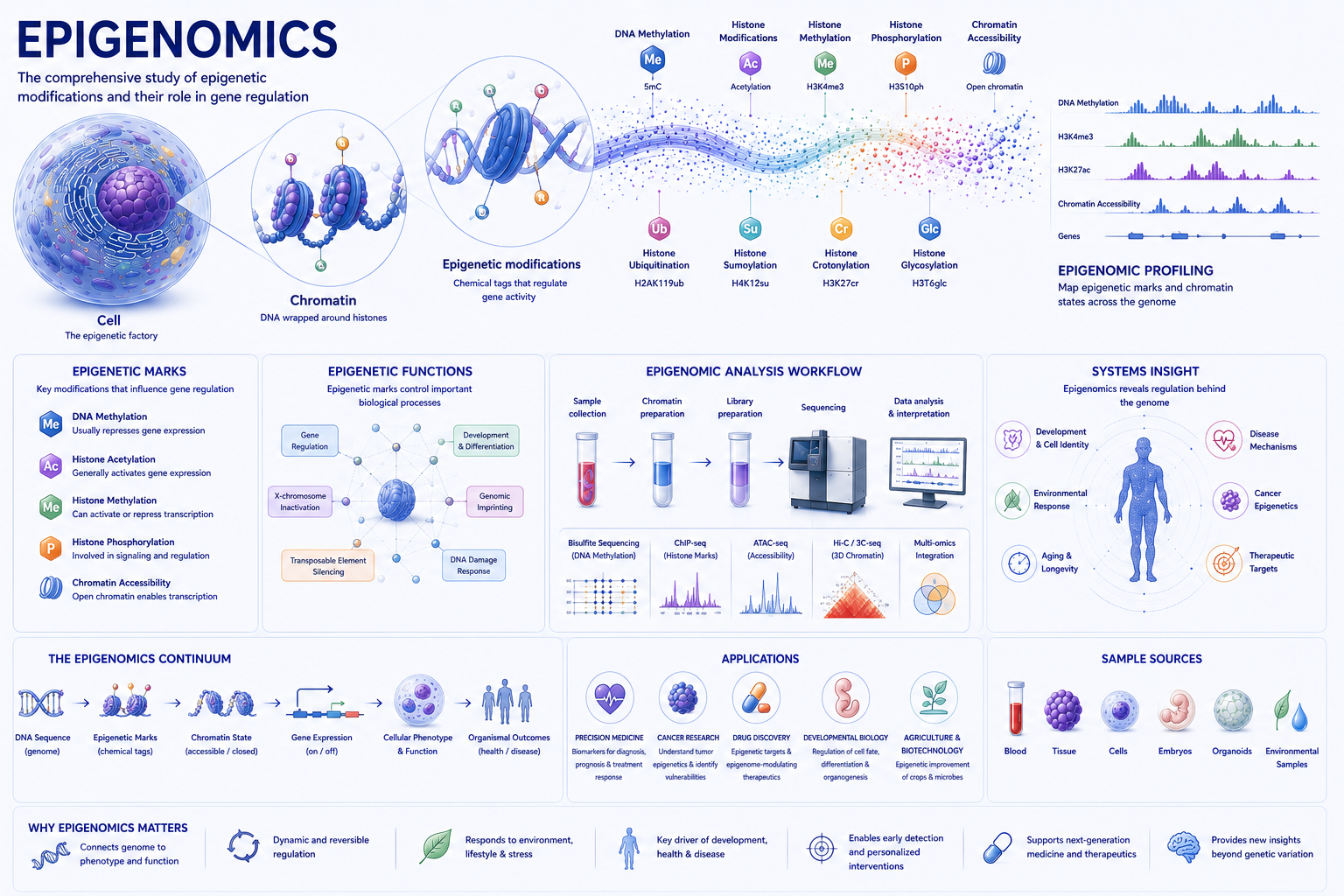
Epigenomics is the study of genome-wide regulatory marks and chromatin features that influence gene activity without changing the underlying DNA sequence.
Modern epigenomics uses sequencing technologies, chromatin profiling, DNA methylation analysis, and computational biology to understand cellular identity, development, aging, cancer, and environmental response.
Applications in Research & Medicine
DNA Methylation
Studying chemical marks that influence gene activity, genome regulation, and disease risk.
Histone Modifications
Understanding chromatin marks that shape gene expression programs and cellular identity.
Chromatin Accessibility
Mapping open and closed chromatin regions that control regulatory activity.
Disease Epigenomics
Identifying epigenetic disruptions linked to cancer, aging, inflammation, and disease progression.
Epigenomics and Omics Sciences
Epigenomics connects genomic information to gene regulation by revealing how chromatin structure and chemical modifications influence whether genes are active, silent, or dynamically controlled.
At PanorOmics, epigenomics is a critical regulatory layer that links genomics, transcriptomics, environmental exposure, aging, cancer biology, and precision medicine.
Explore Related Publications →