Microbiomics
Microbiomics is the study of microbial communities and their collective genomes across the human body, environment, and ecosystems. By examining bacteria, archaea, fungi, viruses, and other microorganisms, microbiomics reveals how microbial ecosystems influence health, disease, immunity, metabolism, and environmental processes.
What is Microbiomics?
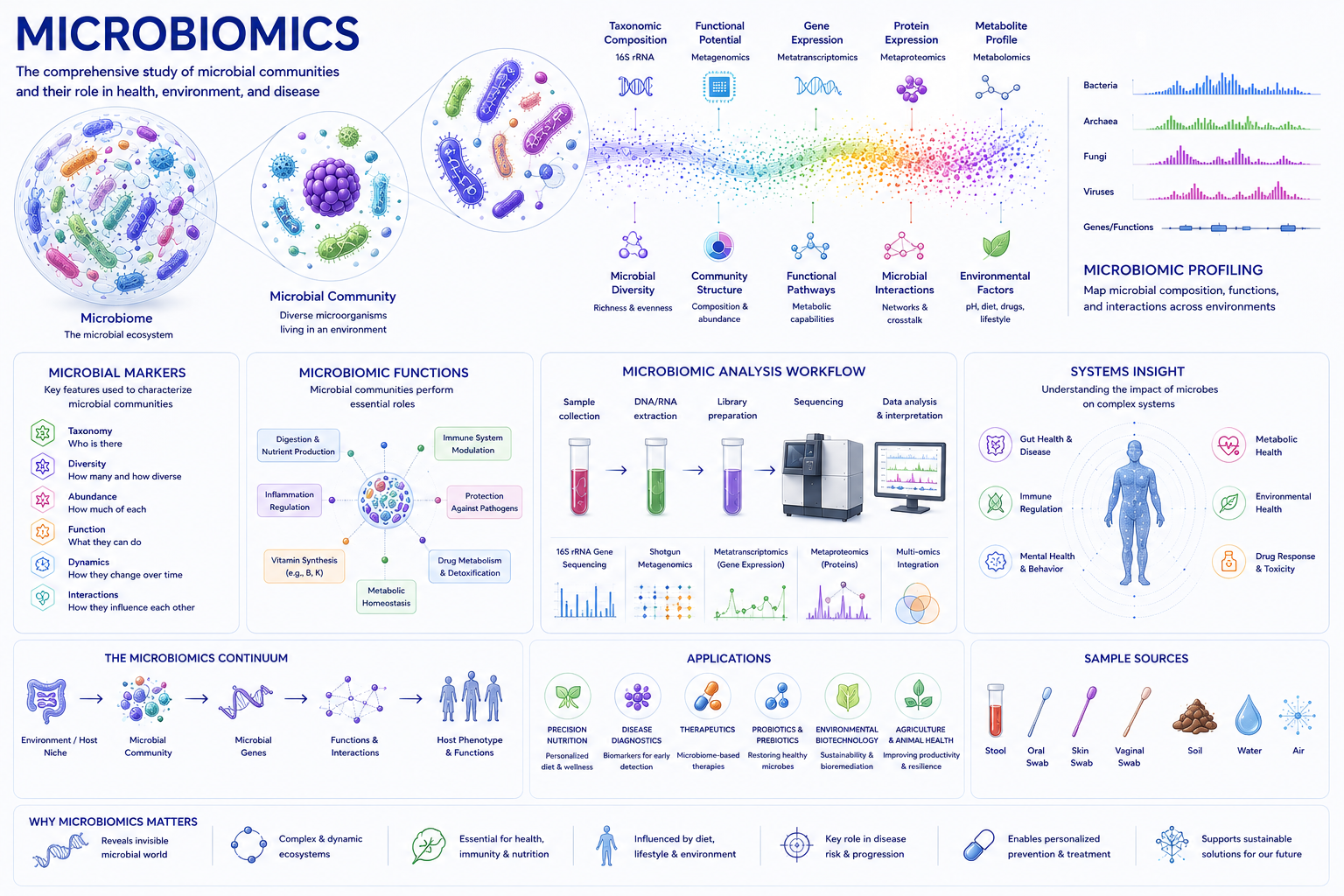
The human body contains trillions of microorganisms that form complex ecosystems known as the microbiome. These microbial communities contribute to digestion, immune regulation, nutrient production, drug metabolism, and protection against pathogens.
Modern sequencing technologies allow scientists to characterize microbial diversity, identify microbial genes, and understand interactions between microorganisms and their hosts at unprecedented resolution.
Applications in Research & Medicine
Human Health
Investigating the role of microbial communities in obesity, diabetes, inflammatory bowel disease, cancer, and neurological disorders.
Precision Medicine
Developing microbiome-based diagnostics, therapeutics, and personalized treatment strategies.
Infectious Diseases
Understanding microbial ecology, pathogen interactions, and antimicrobial resistance.
Environmental Science
Exploring microbial ecosystems in soil, oceans, agriculture, and climate-related processes.
Microbiomics and Omics Sciences
Microbiomics is deeply integrated with genomics, transcriptomics, proteomics, metabolomics, and systems biology. Combining multiple omics layers allows researchers to understand not only which microorganisms are present, but also what they are doing, how they communicate, and how they influence biological systems.
At PanorOmics, microbiomics represents a critical component of the broader Architecture of Life framework, connecting microbial ecosystems with host biology, human health, and environmental sustainability.
Explore Related Publications →