Proteomics
Proteomics investigates the complete set of proteins expressed within biological systems. By studying protein abundance, structure, interactions, signaling pathways, and post-translational modifications, proteomics reveals the functional machinery driving cellular biology, disease mechanisms, and therapeutic discovery.
What is Proteomics?
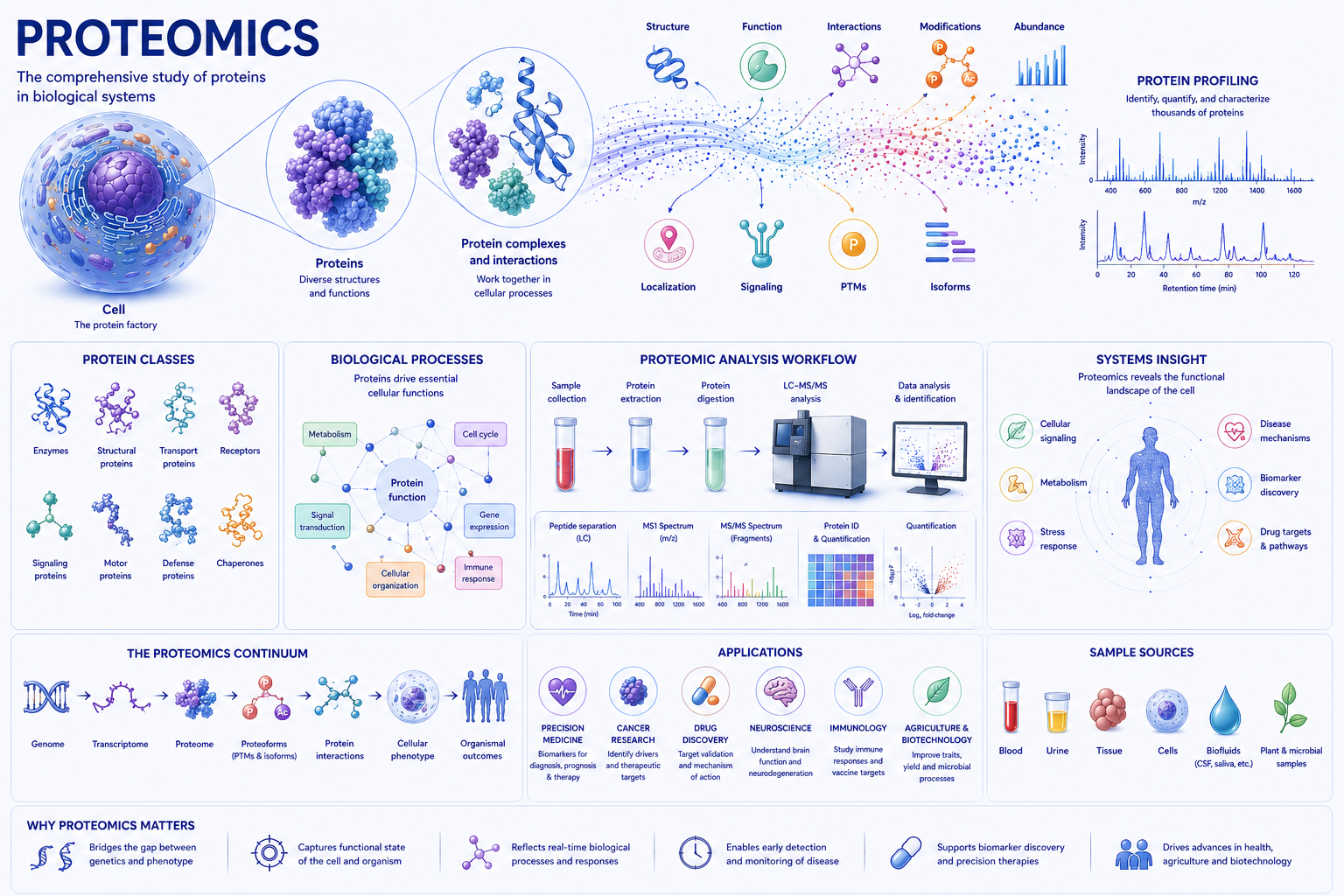
Proteomics is the study of the full protein complement of cells, tissues, or organisms. Proteins carry out many of the biological functions encoded by genes and regulated by cellular systems.
Modern proteomics uses mass spectrometry, protein interaction analysis, pathway mapping, and computational biology to understand cellular function, disease mechanisms, biomarkers, and therapeutic targets.
Applications in Research & Medicine
Protein Identification
Characterizing proteins and understanding their biological roles across cells, tissues, and disease states.
Mass Spectrometry
Profiling proteins and peptides using LC-MS/MS and other advanced proteomic technologies.
Protein Interactions
Understanding signaling networks, molecular complexes, and functional pathway relationships.
Biomarker Discovery
Identifying disease-associated proteins for diagnosis, prognosis, therapeutic targeting, and monitoring.
Proteomics and Omics Sciences
Proteomics connects genetic and transcriptomic information to biological function by measuring the proteins that execute cellular processes. It reveals how molecular instructions become functional biological activity.
At PanorOmics, proteomics is a critical layer of omics sciences because proteins represent the dynamic machinery through which cells communicate, respond, adapt, and drive health or disease.
Explore Related Publications →